Good ideas are everywhere.
They come from employees, customers, managers, and frontline teams.
The challenge is not generating ideas.
The challenge is managing them effectively.
Without a structured process, valuable ideas disappear while low-impact ideas consume resources.
Why Most Ideas Get Lost
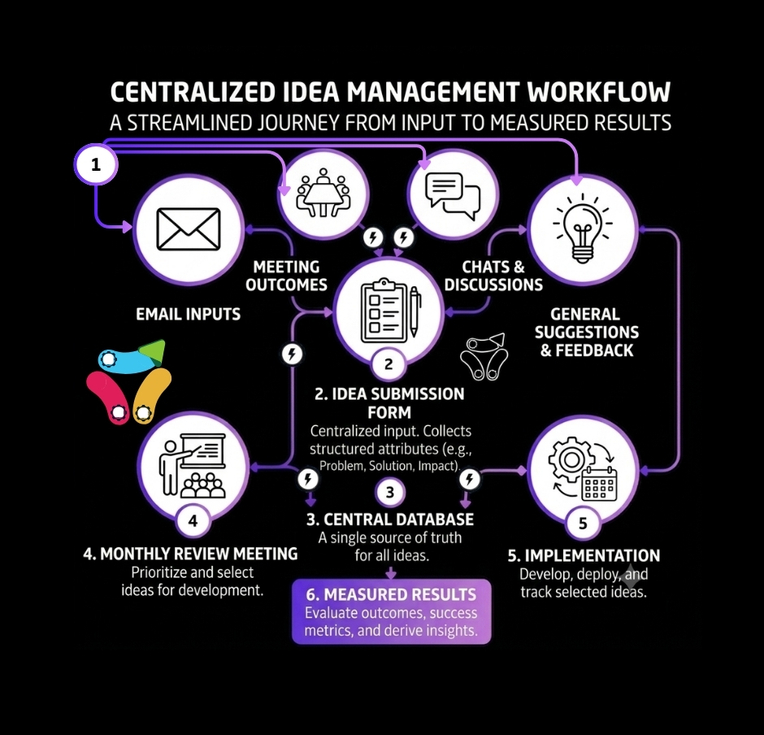
In many businesses, ideas are shared through:
- Meetings
- Emails
- Chat messages
- Informal conversations
The result is predictable.
Nobody remembers them.
Nobody evaluates them consistently.
Nobody tracks outcomes.
Start With a Simple Idea Submission Form
A standardized form helps collect ideas consistently.
Suggested fields include:
Idea Description
What is the proposed improvement?
Problem Being Solved
What challenge currently exists?
Expected Impact
What benefit is expected?
Examples:
- Cost reduction
- Time savings
- Improved customer experience
- Increased revenue
Estimated Effort
How difficult would implementation be?
A Simple Idea Management Workflow
Idea submitted
↓
Stored in central database
↓
Monthly review
↓
Prioritization
↓
Approval or rejection
↓
Implementation
↓
Impact measurement
Prioritize Based on Value
Not every idea should be implemented immediately.
A simple framework can evaluate:
- Business impact
- Implementation effort
- Cost
- Risk
- Strategic alignment
This helps teams focus on high-value improvements first.
Measure Results
One common mistake is implementing ideas without tracking outcomes.
Every approved idea should include:
- Success criteria
- Expected benefits
- Review date
This creates accountability and helps organizations learn which improvements generate the greatest value.
Final Thoughts
Businesses improve when ideas become action.
A simple submission and review process turns scattered suggestions into a structured improvement system.
The goal is not collecting more ideas.
The goal is creating a repeatable process for turning good ideas into measurable business outcomes.