“What if my customers feel like they’re dealing with a robot?”
It’s a valid concern.
Relationships matter.
First impressions matter.
And client onboarding is often the first real experience a customer has after choosing to work with your business.
The good news is that automation doesn’t have to replace the human touch.
In fact, when implemented correctly, it can enhance it.
The Real Purpose of Client Onboarding
Client onboarding isn’t about paperwork.
It’s about creating confidence.
Your new client should feel:
- Welcomed
- Informed
- Supported
- Confident they made the right decision
Unfortunately, many businesses spend so much time managing administrative tasks that they have less time available for actual client relationships.
That’s where automation helps.
What Should Be Automated?
The repetitive administrative work.
Not the relationship.
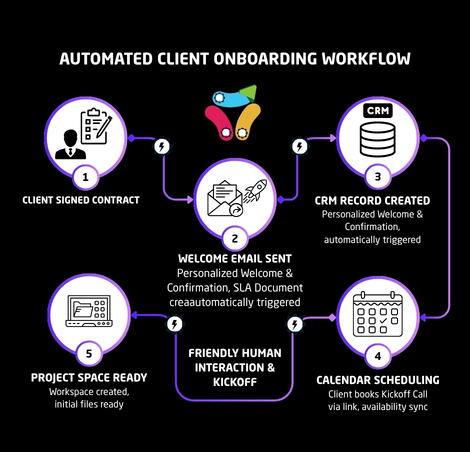
For example, after a client signs:
- Welcome emails can be sent automatically
- Documents can be generated automatically
- Project folders can be created automatically
- CRM records can be updated automatically
- Internal teams can be notified automatically
These tasks are important, but they rarely require personal attention.
What Should Stay Human?
The moments that build trust.
For example:
- Strategy discussions
- Discovery meetings
- Welcome calls
- Personalized recommendations
- Relationship building
Automation should create more time for these activities, not replace them.
The Best Client Experiences Combine Both
The most effective onboarding processes blend automation and human interaction.
The systems handle routine work.
The people handle meaningful conversations.
The result is a smoother experience for both the client and the business.
Signs Your Onboarding Process Needs Improvement
- New clients ask the same questions repeatedly
- Documents are sent manually
- Team members forget onboarding steps
- CRM updates are inconsistent
- Clients wait too long for next steps
These are often signs that the process relies too heavily on manual effort.
The Goal Isn’t Automation
The goal is confidence.
A well-designed onboarding process ensures every client receives a consistent experience while allowing your team to focus on building relationships.
Because customers remember how you made them feel—not whether you manually updated a spreadsheet.
Ready to Improve Your Onboarding Process?
The best onboarding systems combine clear workflows, practical automation, and meaningful human interaction.
That’s exactly what a Workflow Audit helps uncover.